
Lafayette and West Lafayette sit across the Wabash River from each other, and together they have more than 200 years of history. Here is a quick look at how our community grew.
Before Lafayette: Fort Ouiatenon
The Wea people, part of the Miami, lived along this stretch of the Wabash long before European settlers arrived. In 1717, the French built Fort Ouiatenon, a trading post on the river southwest of present-day West Lafayette. It was the first fortified European settlement in what is now Indiana. Read more in our post on Fort Ouiatenon and the Feast of the Hunters’ Moon.
William Digby’s river town
A trader named William Digby platted the town of Lafayette in May 1825. The next year it became the county seat of the newly formed Tippecanoe County. Like many towns of that era, it was named for the Marquis de Lafayette, the French officer who helped George Washington during the Revolutionary War and toured the United States in 1824 and 1825.
In its early days, Lafayette was a shipping center on the Wabash. The Wabash and Erie Canal arrived in the 1840s, and railroads came in the 1850s, connecting Lafayette with other major markets. The Monon Railroad linked the city with other parts of Indiana.
America’s first official airmail
On August 17, 1859, balloonist John Wise lifted off from the courthouse grounds in Lafayette carrying mail bound for New York. The weather forced him down near Crawfordsville, and the mail finished its trip by train. A century later, the U.S. Postal Service issued a 7-cent airmail stamp marking the flight.
The Tippecanoe County Courthouse
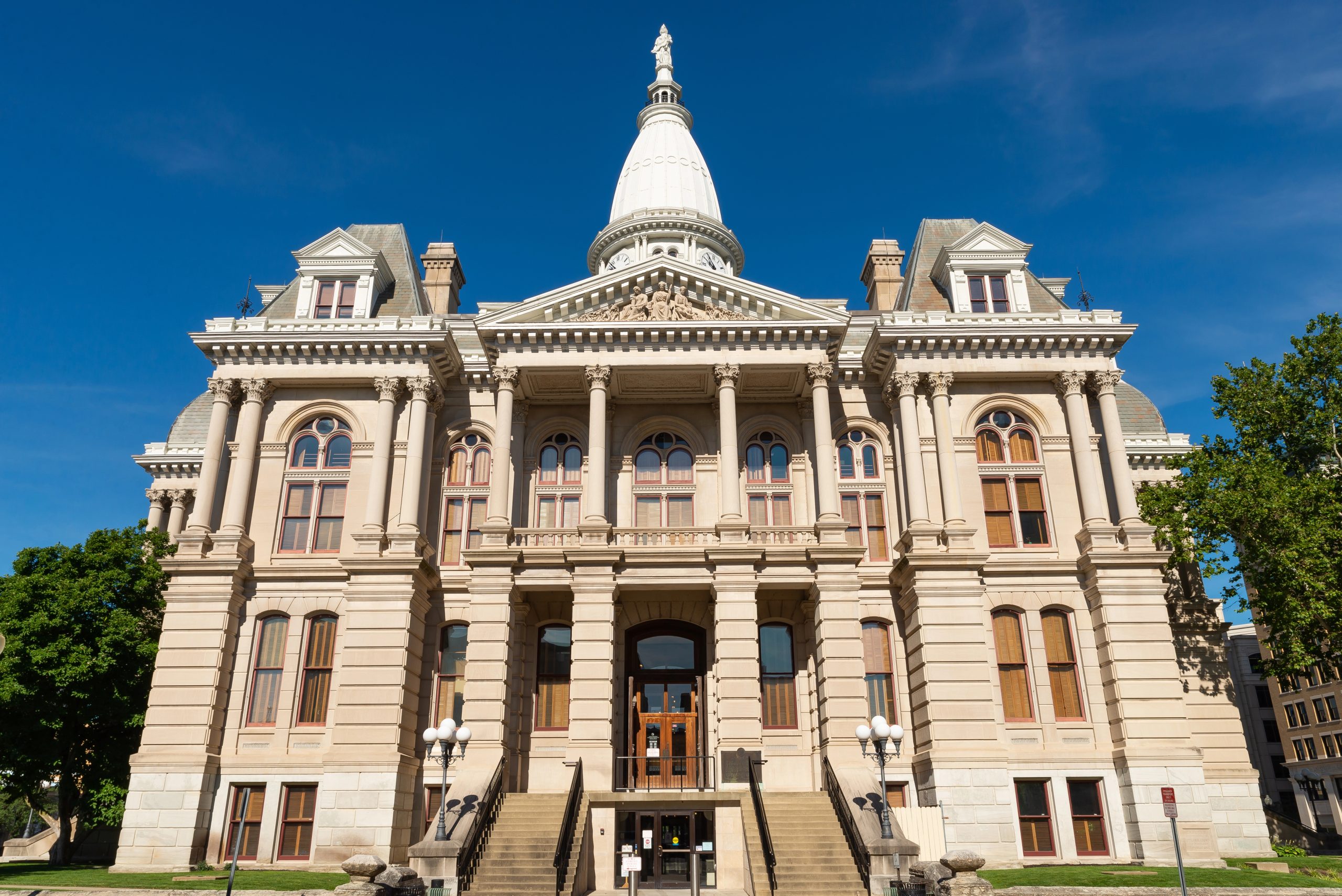
The courthouse that anchors downtown Lafayette is the county’s third, built from 1881 to 1884 for about $500,000. It is made of Indiana limestone and has 100 columns, nine statues, four clock faces and a 3,000-pound bell. A 14-foot statue of Liberty tops the dome, 212 feet above the ground. It was the most expensive courthouse built in Indiana at the time, and local lore says Mark Twain joked that it must have “struck the taxpayers a mighty blow.” It was added to the National Register of Historic Places in 1972.
West Lafayette and Purdue
Across the river, Kingston was laid out in 1855 and Chauncey was platted in 1860. The two villages formed one town, called Chauncey, in 1866. Things changed when Lafayette businessman John Purdue donated land and money to start a college of science, technology and agriculture. Purdue University was founded in 1869 and held its first classes on September 16, 1874.
In 1888, the town of Chauncey voted to change its name to West Lafayette. Today it is home to Purdue’s flagship campus and is the most densely populated city in Indiana.
History you can still see
Many of the neighborhoods that grew up in those years are now historic districts, including Ellsworth (named for early land promoter Henry Ellsworth), Centennial, Perrin, Ninth Street Hill, Highland Park, St. Mary and Upper Main Street in Lafayette, and the Chauncey-Stadium Avenues district in West Lafayette. If you own one of these older homes, see our tips on insuring an older home.
Your local agency since 2011
Lafayette Insurance is proud to be part of this community. We are an independent agency, so we compare several insurance companies to find the right home, auto, life and business coverage for you. Serving West Lafayette, Lafayette and all of Tippecanoe County. Call or text 765-474-2300.